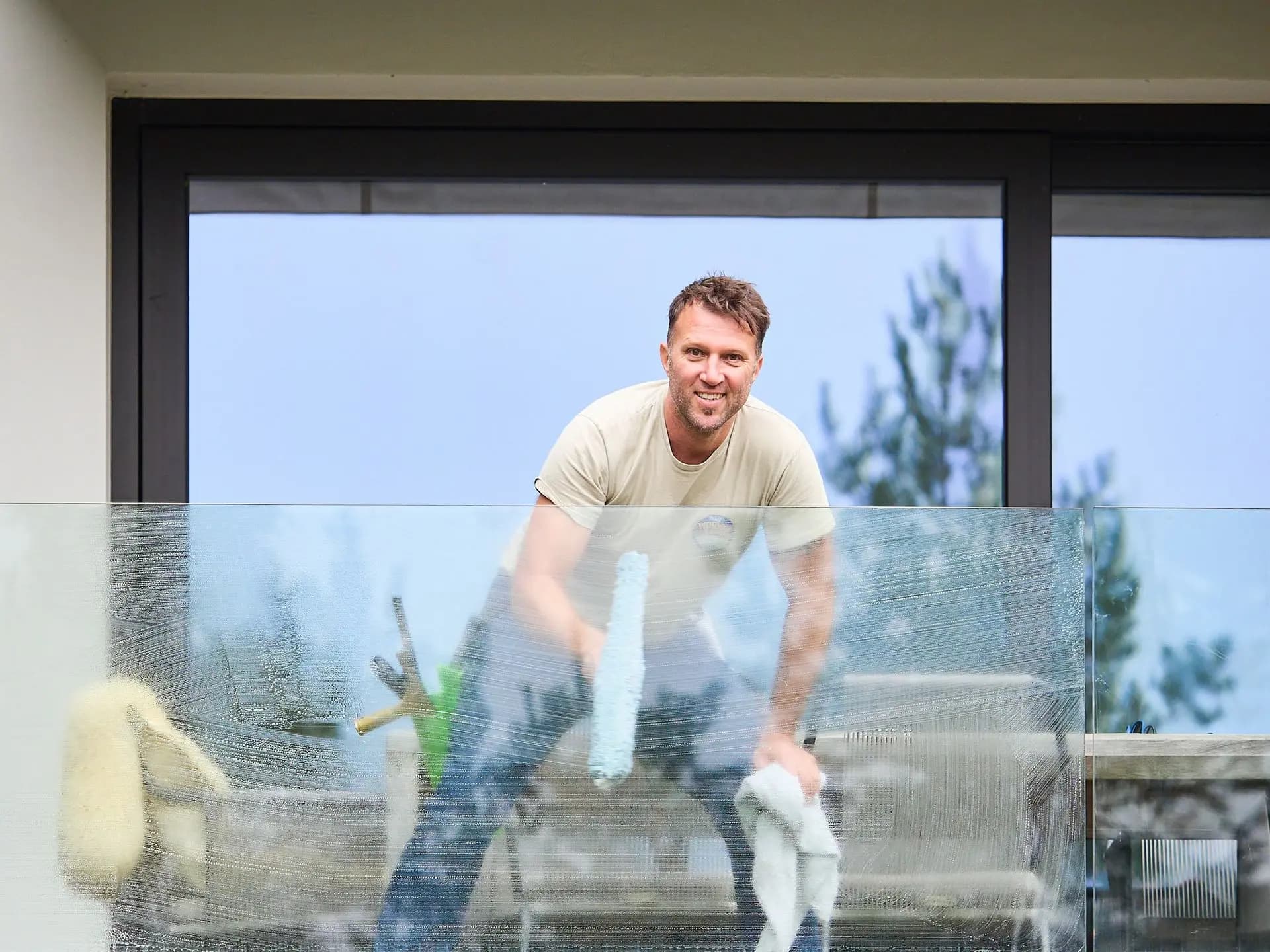
You followed the instructions. You bought the "streak-free" cleaner. You watched the videos. You spent an hour on a Saturday morning carefully cleaning every window in the house.
In Short
Streaks after cleaning are a technique problem, not a product problem. A streak is the residue left behind when dirt, soap, or minerals are moved across the glass instead of removed from it. The seven causes are the wrong cleaner, too much soap, hard water, direct sunlight, paper towels, poor squeegee technique, and skipped edge detailing. The fix is the professional method: a few drops of dish soap in water, a scrubber, a squeegee wiped dry between passes, and a lint-free microfiber cloth along every edge.
Then the afternoon sun came through and there they were. Streaks. Everywhere.
Cleaning windows professionally since 1999, from residential homes in Melbourne to high-rise buildings in Vienna, I can diagnose window streaks the way a mechanic diagnoses engine noise. And in almost every case, the cause is one of seven things that nobody talks about.
Cause #1: You're Using the Wrong Cleaner
Your "streak-free" glass cleaner is probably creating the streaks. The fix: a few drops of dish soap in a bucket of water.
Cause #2: Too Much Soap
More soap does not mean cleaner windows. Excess soap creates a film on the glass.
Cause #3: Your Water Is Working Against You
If your tap water has high mineral content, those minerals stay on the glass as white spots.
Cause #4: You're Cleaning in Direct Sunlight
When sunlight hits wet glass, the cleaning solution evaporates faster than you can squeegee it off.
Cause #5: You're Using the Wrong Tools
Paper towels leave streaks. Always. Without exception. What actually works is a squeegee, a scrubber, and a clean 100% cotton toweling rag.
Cause #6: Your Squeegee Technique Is Off
Wrong angle. Stopping mid-stroke. Not wiping the blade between passes.
Cause #7: You're Detailing Wrong (Or Not At All)
The last 10% of the job creates 90% of the visible streaks. One pass with a clean 100% cotton toweling rag along each edge.
The Quick Diagnosis
- Streaks everywhere: Too much soap or wrong cleaner
- White spots or cloudy film: Hard water minerals
- Streaks that appear quickly: Sunlight evaporation
- Tiny fiber marks: Paper towels
- Lines running vertically: Edge water dripping down
- Random streaks: Dirty squeegee blade
How to Clean Windows Without Streaks
Now you know why the streaks are there. Here is the method that removes them.
Professional window cleaning is two moves, in order. First you agitate the dirt so it dissolves, ready for the squeegee to shave away. Then you clear the water in one clean pass. Most people rush straight to the second move and wonder why they fight streaks all day.
Step 1: Dry Wipe First
Wipe down the frame and sill with a dry cloth to remove loose dust, cobwebs, and debris.
Step 2: Prepare the Glass
Always use cold water. Hot water evaporates faster, giving you less time to work.
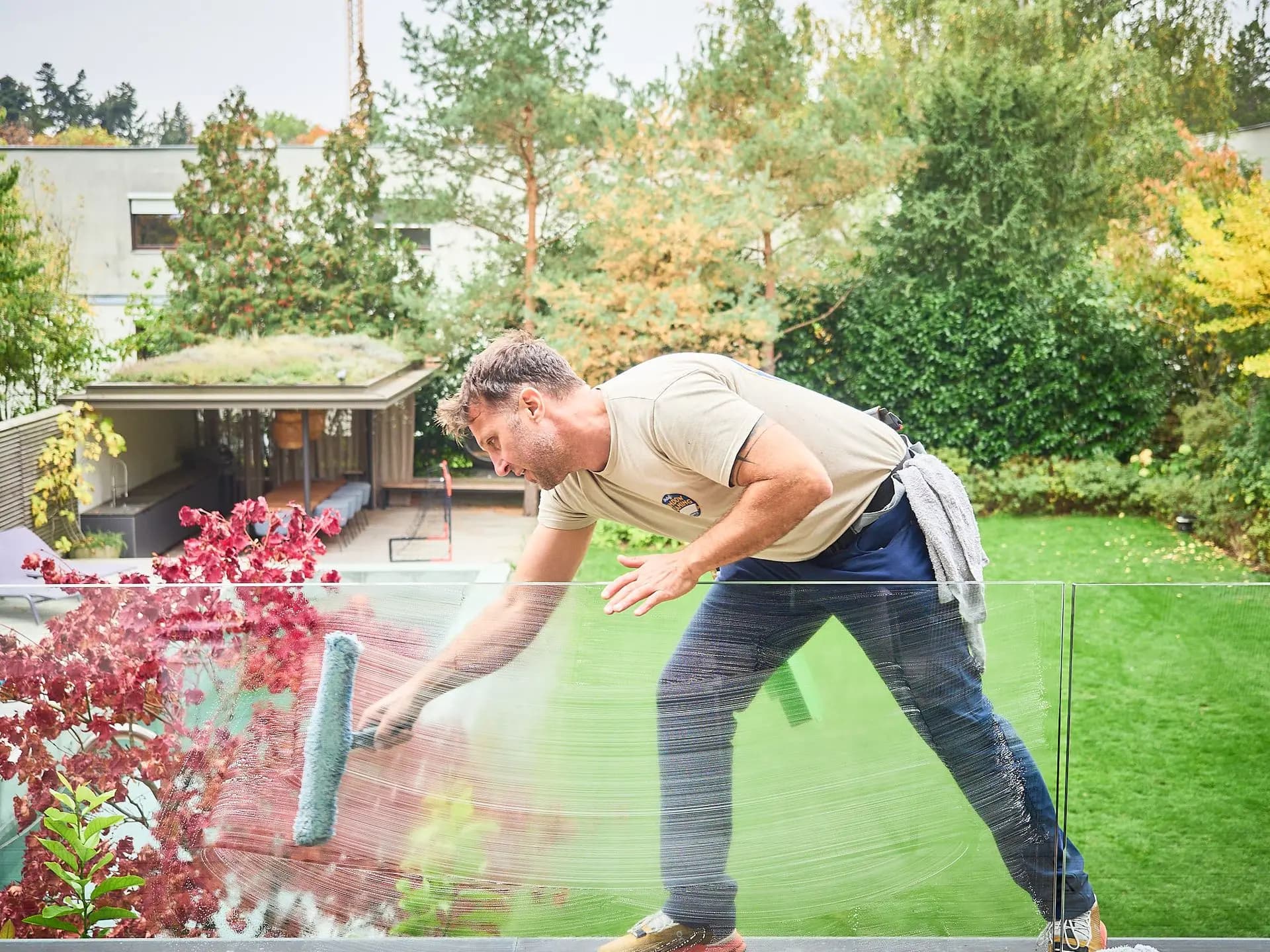
Apply solution to the entire surface, top to bottom. Make sure every part is evenly coated. Work a T-bar applicator or scrubber across the whole pane, into the corners, until the dirt is broken up and floating in the water. Do not skimp on this. The whole job is won here, before the squeegee ever touches the glass.
Step 3: The Squeegee Stroke
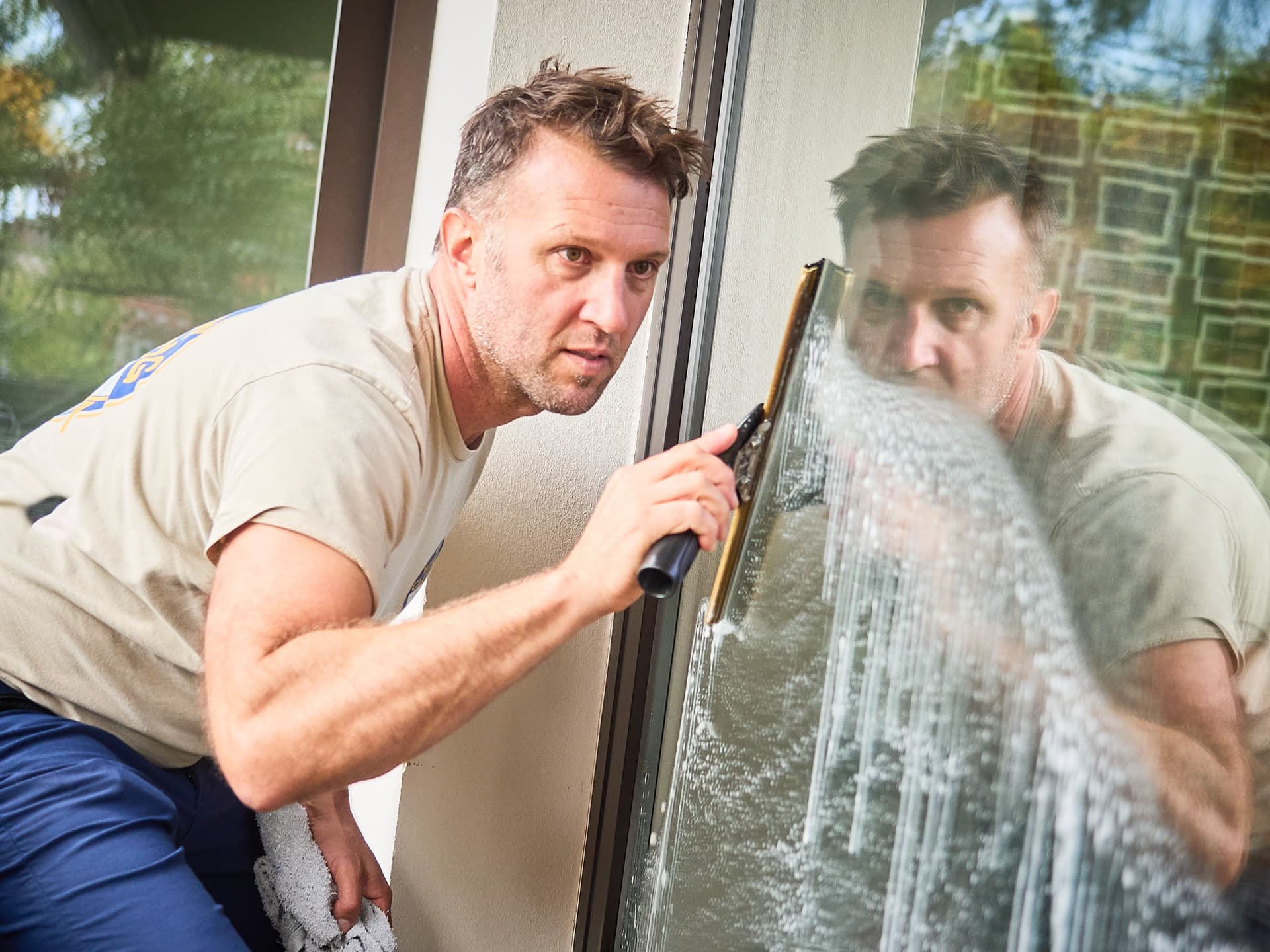
Now the squeegee. Hold it at a slight angle, around forty five degrees, so it shaves the water off cleanly rather than pushing a wave in front of it. Overlap each stroke slightly into the clean, dry part you just did.
Your technique options:
- Straight pull (easiest for beginners)
- Fan technique (fastest for large panes)
For the straight pull:
- Place the squeegee blade in the top left corner
- Pull straight down in one smooth motion
Two more mistakes to avoid here: inconsistent pressure and working bottom to top.
There are three squeegee turns a professional uses to clear a whole pane without lifting the blade: side to side, top to bottom, and the turn with a twist, which we call the J turn. Learning to link them is what separates a slow, streaky clean from a fast, flawless one. The basic turns are the foundation. The turn with a twist is where the real fluency comes in, and it is the heart of the training.
Step 4: Detail the Edges
Use your cotton toweling rag to wipe top edge, left and right edges, and bottom sill.
Step 5: Final Check
Step back and check the glass from an angle with light behind or beside it. Fix any remaining spots.
Keep Your Rubber Fresh
Finding this useful?
A worn squeegee rubber streaks no matter how good your stroke is, and a new one costs a dollar or two.
Reading about a squeegee stroke and feeling it in your hand are two different things. Nothing teaches your hands to hold the blade at the right angle like actually doing it with guidance.
The streaks end here. Start with Step 1, "The Window Cleaning Manifesto."
If you want the technique taught properly, step by step, start with my window cleaning course. It starts with Step 1, the Manifesto.
Related Guides
Questions people ask
Why do my windows still have streaks after cleaning?
Because streaks come from technique, not from the product you used. Cleaning windows professionally since 1999, I see the same seven causes: the wrong cleaner, too much soap, hard water minerals, cleaning in direct sunlight, paper towels, a squeegee held at the wrong angle or not wiped between passes, and edges that were never detailed. Fix the technique and the streaks stop.
Does streak-free glass cleaner actually work?
Usually it is the cause of the streaks, not the cure. Spray cleaners leave a film on the glass, and more product makes it worse. The professional solution is a few drops of dish soap in a bucket of water, which lifts the dirt without leaving residue.
What is the best way to clean windows without streaks?
Use a scrubber to dissolve the dirt, a squeegee to remove the water, and a clean 100% cotton toweling rag to detail the edges. Wipe the squeegee blade dry between passes, and never clean glass in direct sunlight because the water evaporates before you can squeegee it off. Paper towels leave streaks every time.
Why do white spots appear on my windows after cleaning?
White spots or a cloudy film are hard water minerals. If your tap water has a high mineral content, those minerals stay on the glass when the water dries. Streaks everywhere point to too much soap or the wrong cleaner, while tiny fiber marks point to paper towels.