
Asia-Pacific · Window Manufacturer
Sapphire Windows & Doors — Window Cleaning Guide
🇸🇬 Singapore · Last reviewed by Justin Orloff

Quick Facts
founded
35+ years Singapore
hq
Singapore
primaryMaterials
uPVC profiles with steel reinforcement, security hardware
glazingPartner
System fabricator - laminated and standard glass
marketTier
Mid to Premium
Brand at a Glance
- Country: Singapore
- Founded: 35+ years ago
- Speciality: Security-grade and burglar-proof uPVC windows
- Glass options: Standard, laminated, and tinted
- Market: Residential security-conscious market, Singapore
Product Range
- Security uPVC casement windows
- Security uPVC sliding windows
- Laminated glass options
Why This System
Security-grade uPVC with steel reinforcement is heavier than standard profiles - the sash weight loading on hinges and rollers is higher, and hardware maintenance is more critical. Multi-point locking hardware on security windows has more exposed metal components than standard single-point locks - each lock point is a potential corrosion and grime accumulation site in tropical conditions. Laminated glass has a visible interlayer at the glass edge - this interlayer is moisture-sensitive and any water ingress at the glass seal causes interlayer delamination. Edge seal inspection at every clean is essential.
Step 1 of 2: Manufacturer Recommendations
Official Care Guidance
Source: ORLOFFS PROFESSIONAL GUIDANCE - SECURITY uPVC PROTOCOL
Glass - Standard and Laminated
- Standard glass: pH-neutral solution, squeegee top to bottom. Standard technique.
- Laminated glass: same cleaning approach but inspect the edge seal at every clean. Report any discolouration, bubbling, or seal breakdown at the glass perimeter.
- Do not allow water to pool at the base of the frame - it sits against the glass edge seal and accelerates seal failure.
uPVC Frames
- pH-neutral, solvent-free cleaner on all uPVC surfaces. Microfibre cloth or soft sponge.
- Do not use citrus oil products, solvent cleaners, or abrasive pads on uPVC.
- Rinse thoroughly - solution residue on uPVC in tropical sun accelerates UV degradation.
Security Hardware
- Wipe all exposed lock hardware with a damp cloth and dry immediately - tropical humidity accelerates hardware corrosion.
- Check all lock points for clean engagement. Debris in keeper recesses is common and prevents full lock engagement.
- Apply a small amount of graphite or PTFE lubricant to lock points annually - not oil, which attracts dust.
Step 2 of 2: The Orloffs Protocol
The Orloffs Protocol
Since 1999 I've cleaned hundreds, if not thousands, of different window brands and systems. The physics of clean glass don't change from one brand to the next. Follow the steps below and you'll clean your Sapphire Windows & Doors windows to a professional standard — guaranteed.
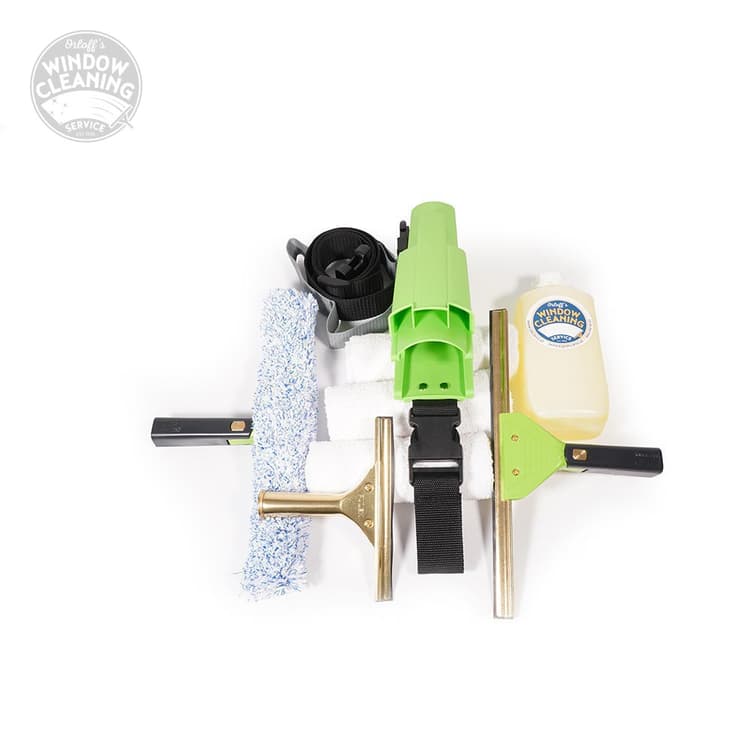
Pro Tools
My daily tool list. This is what I carry to every job.
Follow these steps in order. Each one builds on the last. This is the same sequence I use on every Sapphire Windows & Doors installation.
- 1
Preparation -- before any water touches the glass
Fill the bucket with at least 10 litres of water. Add soap for cleaning power -- enough to cut through environmental deposits, not so much you are fighting foam.
Before touching the glass, brush down the surface to remove loose dust, spiderwebs, and debris. Any grit left on the glass during the wash phase risks scratching during agitation.
Check the aluminium frame condition before you start. Confirm which cleaning product is safe for that surface before opening any bottle.
Cover anything below the windows that cannot be moved.
- 2
Agitation -- apply and work the solution
Dip the microfiber T-bar completely into the soap water, both sides. Remove excess water with your hand so it does not drip. Apply the solution across the entire glass surface with overlapping passes.
The goal is to fully dissolve and release every deposit from the glass surface. Anything not released during agitation gets transported across the glass by the squeegee as a smear.
For stubborn spots -- insect marks, salt residue, environmental deposits -- re-apply soap water and allow it to soak for a full minute before agitating again. Use more soap water, not more pressure.
For panels above arm reach: attach the T-bar to an extension pole. Work in sections -- top first, then middle, then bottom -- keeping each section wet until you squeegee it.
Rinse the T-bar cover regularly during the job. A dirty applicator causes microscopic scratches that accumulate over time.
- 3
Detail the frame edge before squeegeeing
Use your 100% cotton towelling rag, finger pressed into the fabric, to work into every junction and remove pooled soap water before the squeegee pass.
This prevents drips running down onto already-cleaned areas during squeegeeing and keeps soap water out of drainage channels.
On Sapphire Windows aluminium frames, pay particular attention to the bottom edge where glass meets the frame sill -- water pooled here runs into drainage openings and leaves residue over time.
- 4
The squeegee
Tilt the squeegee at a slight angle so soap water spills from one side of the channel only -- not both. If the rubber is jumping or squeaking, either the rubber is not lubricated enough or the glass surface has warmed.
Cutting in: start with the rubber blade making first contact on a dry edge of the glass.
Side to side: horizontal passes across the panel. Works well on wide sections. Top to bottom: vertical passes down the panel. Works well on tall narrow sections.
The J tune: one smooth unbroken motion top to bottom, wrist rotating at each end to reverse without lifting the rubber. The most efficient method on larger panels -- but it requires training before applying it to premium glass.
Wipe the rubber dry after every pass. Overlap each stroke by 2-3 cm.
- 5
Final edge detailing
After squeegeeing, there is always a residual line of water along the bottom edge and at the panel sides. Take a dry cotton rag, fold to a clean corner, and detail these edges in one smooth pass.
On Sapphire Windows frames, the bottom edge where glass meets the sill requires the most careful attention. Water left here runs into drainage and leaves residue that affects the next clean.
Rotate the rag to a clean section after every pass. If the rag picks up grit at any point, replace it immediately.
- 6
Frame wipe and hardware check
On Sapphire Windows powder-coated aluminium frames: use pH-neutral cleaner only, never abrasive pads or steel wool. Dry immediately after wiping.
Check that all drainage openings are clear and unobstructed. Water must be able to flow freely -- a blocked channel leads to accumulation that affects seal performance over time.
Operate every opening window through its full range. Stiff handles or resistance at locking points indicate hardware that needs lubrication. Flag it to the owner rather than forcing it.
Pro Tips
- On security-window properties, leave a written visit note confirming lock points are functioning correctly - it adds value and protects you if a post-visit security issue is raised
- Laminated glass on security windows is heavier than standard panes - casement hinges carry more weight. Check hinge alignment is correct before and after cleaning on heavy casement configurations
What NOT To Do
- Do not use solvent, citrus oil, or alkaline cleaners on uPVC frames
- Do not allow water to pool at the glass edge seal base - it accelerates laminated glass seal failure
- Do not ignore discolouration at the glass edge on laminated units - report it immediately
- Do not use abrasive pads on uPVC or security hardware finishes
Bundle Kits and Tool Recommendations
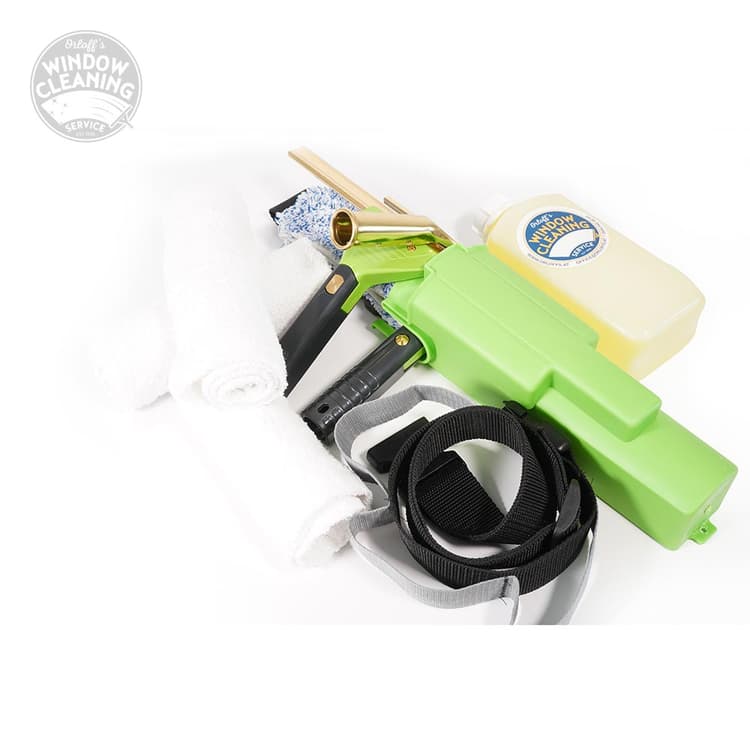
Bundle Kit
Cleaning Frequency
Residential security windows: Every 6 to 8 weeks (Hardware inspection interval is as important as glass cleaning interval)
Frequently Asked Questions
Field Notes
“Security windows are premium-ticket items for the homeowner. Presenting a professional approach that includes hardware inspection and documentation builds significant trust and repeat business. On properties where Sapphire windows are the primary security measure, the homeowner is unusually attentive to window condition. Your standard of finish needs to be high.”
Justin Orloff
What's next for you?
The Skill
New to window cleaning?
Start with the core techniques before tackling premium systems.
Start Learning →The Standard
Upskill your team
Covers every system, product type, and tricky scenario.
View The Standard →Manufacturer
Partner with Orloffs
Are you Sapphire Windows & Doors or a similar manufacturer? Let's create official cleaning guidance together.
Get in Touch →