
Asia-Pacific · Window Manufacturer
Aparna Venster — Window Cleaning Guide
🇮🇳 India · Last reviewed by Justin Orloff
Quick Facts
Founded
2002
HQ
Hyderabad, Telangana, India
Parent
Aparna Enterprises Group
Materials
uPVC profiles
Specialty
South India market leader in uPVC windows
Market
South India residential and commercial
Brand at a Glance
- Leading uPVC window brand across South India with strong presence in Hyderabad, Chennai, and Bengaluru
- Part of a diversified building-materials group with established contractor relationships
- Systems designed for South India's tropical climate and high monsoon rainfall
Product Range
- uPVC casement windows (standard South Indian residential configuration)
- uPVC sliding windows (two and three track)
- uPVC French doors and sliding door systems
- Mosquito mesh integration - common in South Indian installs due to insects
Why This System
Aparna Venster benefits from the parent group's deep contractor network across South India. Their products are widely installed in apartment complexes in Hyderabad and Bengaluru. For cleaners, this means high-volume multi-apartment contracts are likely to feature Venster systems.
South India's humidity creates mould and mildew on uPVC seals if not cleaned regularly. Monsoon runoff carries red laterite soil that stains white profiles on lower floors. Coastal installations in Visakhapatnam or Chennai face salt air that attacks hardware and frame joints.
Step 1 of 2: Manufacturer Recommendations
Official Care Guidance
Step 2 of 2: The Orloffs Protocol
The Orloffs Protocol
Since 1999 I've cleaned hundreds, if not thousands, of different window brands and systems. The physics of clean glass don't change from one brand to the next. Follow the steps below and you'll clean your Aparna Venster windows to a professional standard — guaranteed.
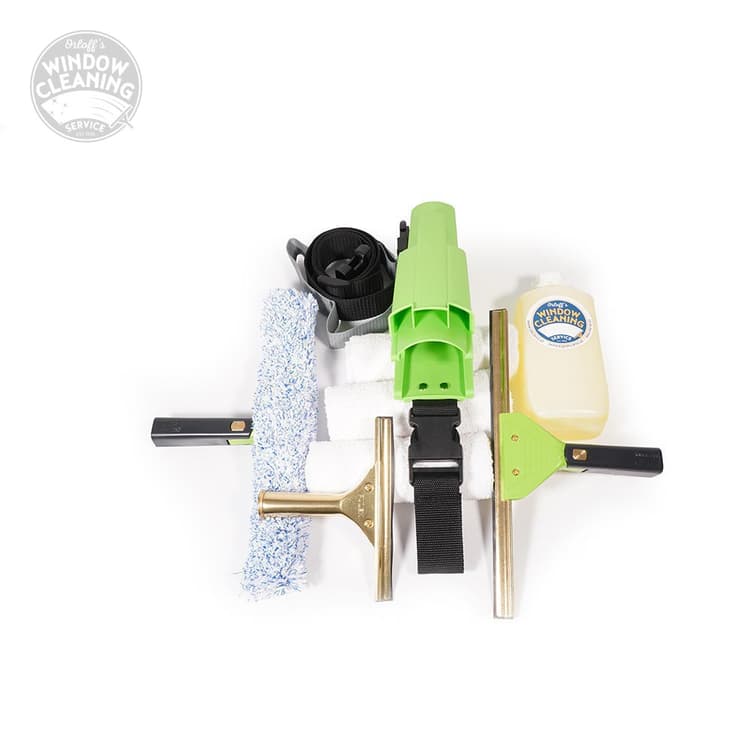
Pro Tools
My daily tool list. This is what I carry to every job.
Follow these steps in order. Each one builds on the last. This is the same sequence I use on every Aparna Venster installation.
- 1
Preparation -- before any water touches the glass
Fill the bucket with at least 10 litres of water. Add soap for cleaning power -- enough to cut through environmental deposits, not so much you are fighting foam.
Before touching the glass, brush down the surface to remove loose dust, spiderwebs, and debris. Any grit left on the glass during the wash phase risks scratching during agitation.
Check the aluminium frame condition before you start. Confirm which cleaning product is safe for that surface before opening any bottle.
Cover anything below the windows that cannot be moved.
- 2
Agitation -- apply and work the solution
Dip the microfiber T-bar completely into the soap water, both sides. Remove excess water with your hand so it does not drip. Apply the solution across the entire glass surface with overlapping passes.
The goal is to fully dissolve and release every deposit from the glass surface. Anything not released during agitation gets transported across the glass by the squeegee as a smear.
For stubborn spots -- insect marks, salt residue, environmental deposits -- re-apply soap water and allow it to soak for a full minute before agitating again. Use more soap water, not more pressure.
For panels above arm reach: attach the T-bar to an extension pole. Work in sections -- top first, then middle, then bottom -- keeping each section wet until you squeegee it.
Rinse the T-bar cover regularly during the job. A dirty applicator causes microscopic scratches that accumulate over time.
- 3
Detail the frame edge before squeegeeing
Use your 100% cotton towelling rag, finger pressed into the fabric, to work into every junction and remove pooled soap water before the squeegee pass.
This prevents drips running down onto already-cleaned areas during squeegeeing and keeps soap water out of drainage channels.
On Aparna Venster aluminium frames, pay particular attention to the bottom edge where glass meets the frame sill -- water pooled here runs into drainage openings and leaves residue over time.
- 4
The squeegee
Tilt the squeegee at a slight angle so soap water spills from one side of the channel only -- not both. If the rubber is jumping or squeaking, either the rubber is not lubricated enough or the glass surface has warmed.
Cutting in: start with the rubber blade making first contact on a dry edge of the glass.
Side to side: horizontal passes across the panel. Works well on wide sections. Top to bottom: vertical passes down the panel. Works well on tall narrow sections.
The J tune: one smooth unbroken motion top to bottom, wrist rotating at each end to reverse without lifting the rubber. The most efficient method on larger panels -- but it requires training before applying it to premium glass.
Wipe the rubber dry after every pass. Overlap each stroke by 2-3 cm.
- 5
Final edge detailing
After squeegeeing, there is always a residual line of water along the bottom edge and at the panel sides. Take a dry cotton rag, fold to a clean corner, and detail these edges in one smooth pass.
On Aparna Venster frames, the bottom edge where glass meets the sill requires the most careful attention. Water left here runs into drainage and leaves residue that affects the next clean.
Rotate the rag to a clean section after every pass. If the rag picks up grit at any point, replace it immediately.
- 6
Frame wipe and hardware check
On Aparna Venster powder-coated aluminium frames: use pH-neutral cleaner only, never abrasive pads or steel wool. Dry immediately after wiping.
Check that all drainage openings are clear and unobstructed. Water must be able to flow freely -- a blocked channel leads to accumulation that affects seal performance over time.
Operate every opening window through its full range. Stiff handles or resistance at locking points indicate hardware that needs lubrication. Flag it to the owner rather than forcing it.
Pro Tips
- Red laterite soil staining on white uPVC: a dilute oxalic acid solution (test first) can lift stains that pH-neutral products will not shift.
- Monsoon season increases mould on rubber seals - a dilute white vinegar wipe (not on frames, only on rubber) controls growth.
- Hyderabad summer dust is fine and penetrating - clear sliding tracks on every visit.
What NOT To Do
- Do not use bleach-based products on uPVC profiles - causes yellowing over time.
- Do not force mosquito mesh retainer clips - they snap and are difficult to source.
- Do not pressure wash at high pressure into frame-to-wall interface - India's window-to-wall sealing is often inadequate and water forces in.
Bundle Kits and Tool Recommendations
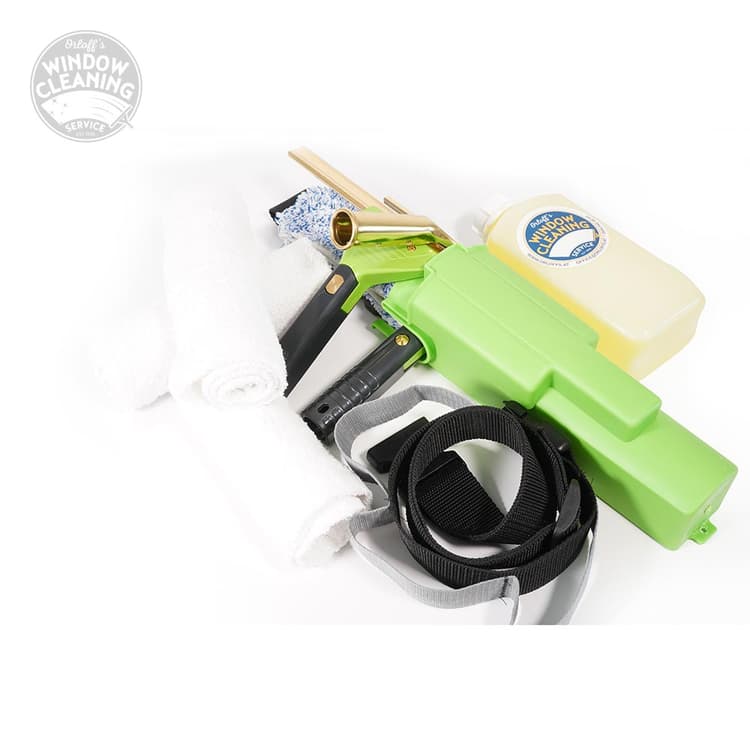
Bundle Kit
Cleaning Frequency
Every 6-8 weeks. Monthly post-monsoon on lower-floor installations with laterite exposure.
Frequently Asked Questions
Field Notes
“Hyderabad apartment complexes often have 8-15 floors of Venster systems installed. The lower 3 floors carry the worst laterite staining. Budget extra time on ground and first floor units during post-monsoon cleans. Check mosquito mesh retainers - these are often the first thing to fail on aging Venster installs.”
Justin Orloff
What's next for you?
The Skill
New to window cleaning?
Start with the core techniques before tackling premium systems.
Start Learning →The Standard
Upskill your team
Covers every system, product type, and tricky scenario.
View The Standard →Manufacturer
Partner with Orloffs
Are you Aparna Venster or a similar manufacturer? Let's create official cleaning guidance together.
Get in Touch →