How to Clean Windows Without Streaks:
"The Pro Technique Most People Never Learn"
You've cleaned your windows. Again. And there they are — those same frustrating streaks, lines, and smears that make the glass look worse than before you started. You've tried the newspaper. You've tried vinegar. You've tried every spray bottle on the shelf. Nothing works.
Here's the truth: it's not your fault. And it's not your cleaner's fault either.
The reason most people can't get streak-free windows is that they've never been shown the actual technique professionals use. It's not a secret — it's just never taught outside the industry.
I'm Justin Orloff. I've been cleaning windows professionally since 1999 — first in Melbourne, then across Vienna, Austria, where I run a premium window cleaning service with a year-long booking calendar. Over 25 years, I've cleaned everything from ground-floor apartment glass to cathedral windows and commercial skyscrapers.
In this guide, I'm going to show you exactly how professional window cleaners get windows so clean. No magic chemicals. No special secrets. Just technique — and by the end of this article, you'll have everything you need to do it yourself.
Quick version: The #1 cause of streaks is improper squeegee angle and inconsistent pressure — not the cleaning solution. Fix those two things and 80% of your streak problem disappears.
Why Windows Streak in the First Place
Before we talk solutions, let's understand the problem. Window streaks come from four sources:
- Solution residue left on the glass after wiping
- Dirty tools spreading grime around instead of removing it
- Wrong squeegee angle leaving a thin film of water
- Inconsistent pressure creating uneven drying patterns
Most DIY advice focuses on the cleaner — but professional window cleaners know that a $5 bucket of dish soap and water, applied correctly with a good squeegee, beats a $20 specialty spray every single time.
The tool is secondary. The technique is everything.
The 3 Tools You Actually Need
You don't need a van full of equipment. Here's what professionals actually use for residential windows:
1. A Quality Squeegee (Not the Suction-Cup Kind)
Forget the rubber-tipped squeegees you find in hardware stores. Professional cleaners use a brass or stainless steel squeegee with a swivel handle. A good 12-inch squeegee runs $15–30. The rubber blade is the critical component — replace it when it develops any nicks or a hardened edge.
2. A Mop or Sleeve Applicator
This is what holds and spreads your cleaning solution across the glass before you squeegee. A microfiber sleeve on a t-bar handle ($12–20) evenly holds solution and agitates grime better than a sponge or cloth.
3. A Detailing Cloth
A lint-free microfiber cloth is your finishing tool — for wiping corners, edges, and any drips after the squeegee pass. Have two: one slightly damp for edges, one dry for final polish.
That's it. Total startup cost: $35–60. If someone is telling you that you need expensive equipment packages to get streak-free windows, they're selling you something you don't need.
The Professional Cleaning Solution (It's Simpler Than You Think)
Here is the exact solution professional window cleaners use in most conditions:
- 1 gallon of clean, cold water
- 2–4 drops of dish soap (yes, just dish soap — nothing fancy)
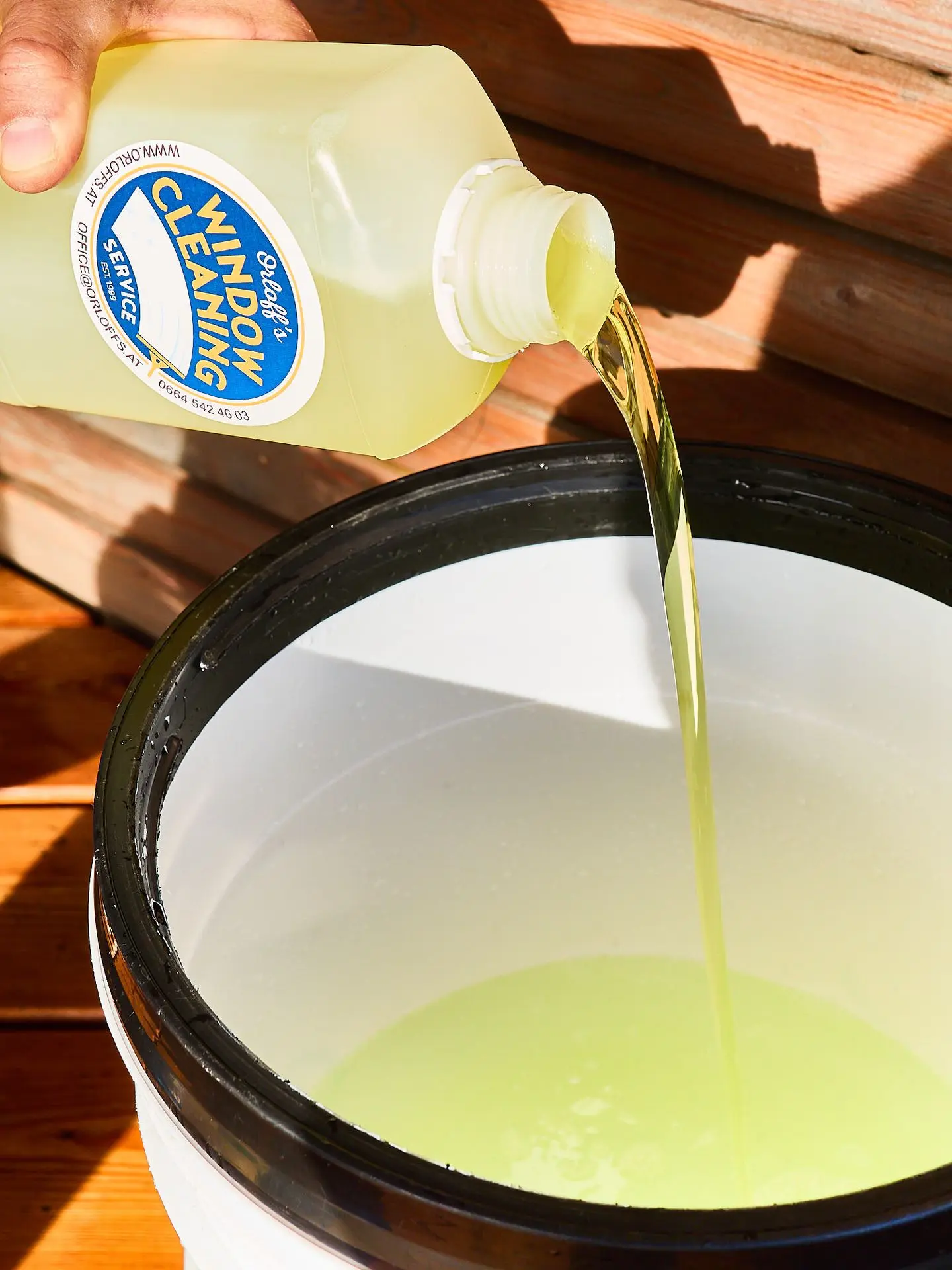
That's it. The solution should feel slightly slippery when you rub it between your fingers — not soapy or foamy. Too much soap is one of the most common mistakes beginners make. Foam means you'll need to rinse more, creating more opportunity for streaks.
A Note on Hot vs. Cold Water
Always use cold water. Hot water evaporates faster, giving you less time to work the glass before it dries and streaks. In direct sunlight, cold water is even more critical — never clean windows in direct sun if you can avoid it.
What About Commercial Window Cleaners?
Products like Windex can work for small jobs — mirrors, individual panes — but they're not designed for large-surface professional work. The alcohol base evaporates quickly, leaving a residue if not buffed immediately. Professionals almost never use them.
Step-by-Step: How to Clean Windows Without Streaks
This is the core technique. Read it completely before you start. The order matters.
Step 1: Dry Wipe First
Before any water touches the glass, wipe down the frame and sill with a dry cloth to remove loose dust, cobwebs, and debris. This prevents dirt from mixing into your solution and dragging across the glass mid-squeegee.
Step 2: Wet the Entire Pane
Dip your t-bar applicator into your solution, wring it slightly so it's wet but not dripping, then apply it to the entire surface of the glass. Work top to bottom. Make sure every part of the pane is evenly coated — dry patches will streak.
For heavily soiled glass, scrub with gentle circular pressure and let the solution sit for 10–15 seconds before squeegee work.
Step 3: The Squeegee — Angle and Pressure Are Everything
This is where most people go wrong, and where professional training makes the biggest difference.
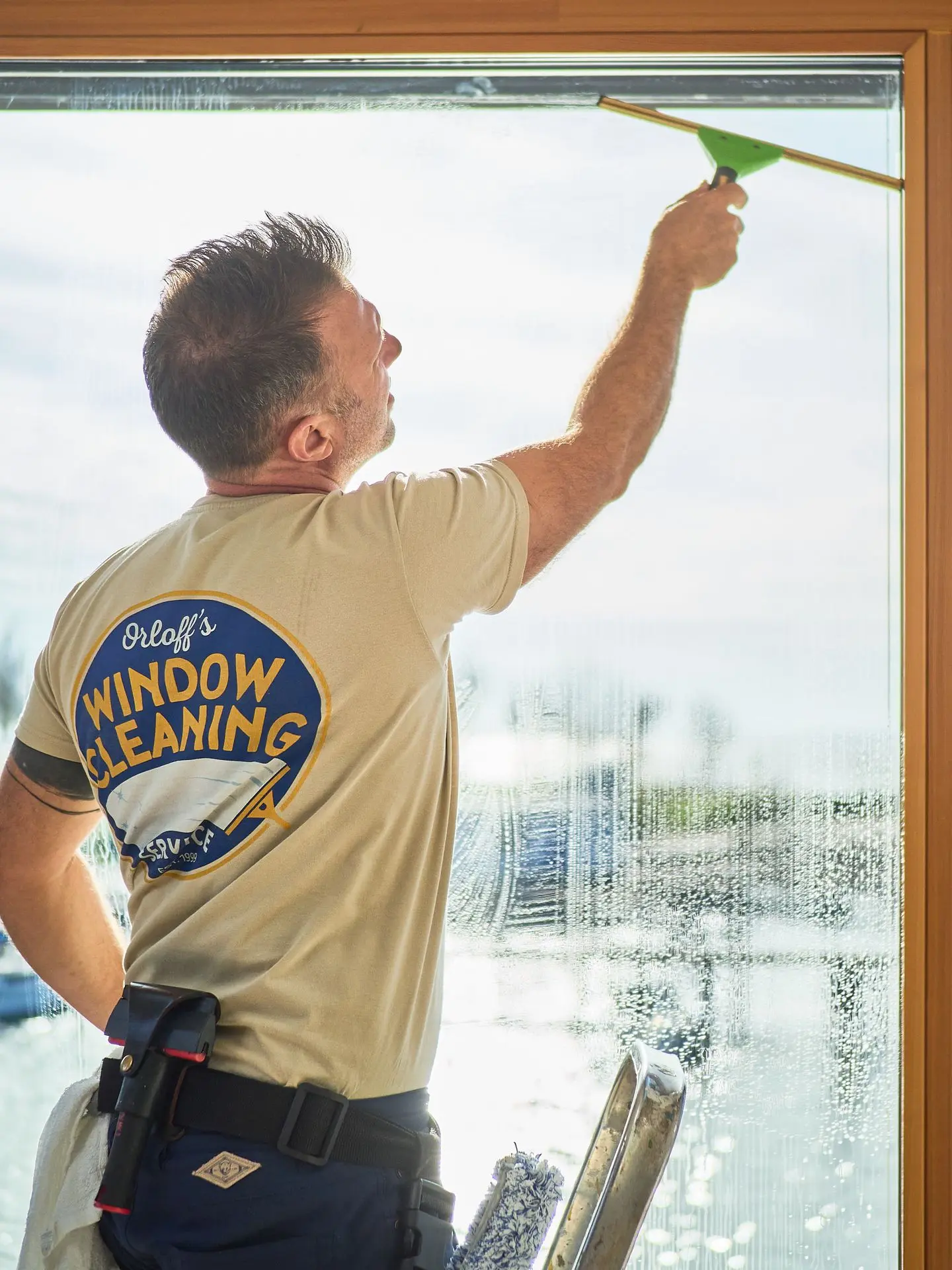
The correct squeegee angle is 45 degrees to the glass. Not 90 degrees (straight on) — that drags water rather than channelling it. Not 20 degrees (too flat) — that leaves a thin film. Exactly 45.
Your technique options:
- Straight pull (easiest for beginners): Place the squeegee at the top of the glass, pull straight down in a single stroke. Angle the blade slightly at the start so water channels to one side. Wipe the blade after each stroke.
- Fan technique (fastest for large panes): Pivot the squeegee in a wide arc starting from the top corner, sweeping across the glass in overlapping fans. This is what you see professionals use on large commercial windows.
For residential windows, the straight pull is your best starting technique. One clean stroke, consistent pressure, blade wiped after every pass.
Step 4: Detail the Edges
The squeegee won't catch the very corners and edges of the frame. Take your slightly damp microfiber cloth and wipe these areas immediately after the squeegee — don't let them dry first or you'll set the residue.
Run the cloth along the bottom sill where water pools, then use your dry cloth to do a final wipe of any remaining drips or smears.
Step 5: Final Inspection
Step back and check the glass from an angle with light behind or beside it. Any streaks will show up clearly at this angle when they'd be invisible straight-on. If you see a streak, it's almost always at an edge — detail it out with your dry cloth.
Professional tip: Inspect glass with the light source at your side, not behind you. You'll catch 3x more imperfections this way.
The 5 Most Common Mistakes
(and How to Fix Them)
Mistake 1: Cleaning in Direct Sunlight
The sun dries your solution before you can squeegee it off. Always clean in shade, in the early morning, or on overcast days. If you must clean in sun, work one small pane at a time, very fast.
Mistake 2: Too Much Soap
More soap does not mean cleaner windows. It means more residue and more streaks. Two to four drops per gallon. If you see foam, you've used too much — dilute it.
Mistake 3: Dirty Squeegee Blade
A single nick in your rubber blade creates a streak that runs the entire length of every stroke. Inspect and replace blades regularly. Wipe the blade with a clean cloth after every single pull.
Mistake 4: Inconsistent Pressure
Pressing hard at the start of a stroke and easing off at the end — or vice versa — leaves water behind at one edge. Think of it as a consistent, even glide. The squeegee should do the work, not your arm.
Mistake 5: Working Bottom to Top
Always work top to bottom. Gravity is helping you. Starting at the bottom and moving up means your dirty runoff flows over your already-clean work.
Difficult Windows: High Panes, Screens, and Hard Water Stains
High Windows
For second-story or high windows, extension poles attach to both your mop applicator and your squeegee. Quality poles ($40–80) are lightweight and allow the same technique from the ground. Avoid ladders where possible — extension poles are safer and faster for most residential high windows.
Our Mastery Course includes a dedicated module on water-fed pole technique, which is the most effective method for high exterior glass.
Window Screens
Remove screens before cleaning glass. A damp microfiber cloth over a flat surface works for cleaning the screen mesh. Tap it lightly to remove loose debris first. Reinstall only after glass and frame are fully dry.
Hard Water Stains
Those white cloudy deposits — mineral scale from hard water — don't respond to standard cleaning. You need an acidic solution: diluted white vinegar (1:1 with water) for mild stains, or a commercial calcium/lime remover for stubborn deposits. Apply, let sit for 2–3 minutes, then scrub with a non-scratch pad before your standard squeegee technique.
Prevention is better than removal: dry window frames after rain, and squeegee exterior glass regularly rather than letting water spots build up.
How Long Does It Actually Take to Get Good at This?
This is the question I get asked most often, and the answer surprises people: most students achieve consistent, professional-quality results within 6–8 hours of focused practice.
The reason it takes professionals weeks to reach their peak is not the technique itself — it's the volume repetition needed to build true muscle memory at speed across all surface types and conditions. For home use, 6–8 hours is genuinely enough.
The critical factor is learning the correct technique from the start. Every hour spent practicing the wrong technique builds bad habits that take twice as long to unlearn. This is exactly why structured training — rather than YouTube trial and error — saves people significant time.
The gap between amateur and professional results? About 6–8 hours of practice on the right technique. That's it. The challenge is knowing what 'right' looks like — which is exactly what AR training solves.
Why AR Training Changes Everything for Learning Window Cleaning
Learning squeegee technique from a written guide or even a video has one fundamental limitation: you can't see your own angle and pressure in real time. You can watch a professional demonstrate the perfect 45-degree angle, but when it's your turn, you're guessing.
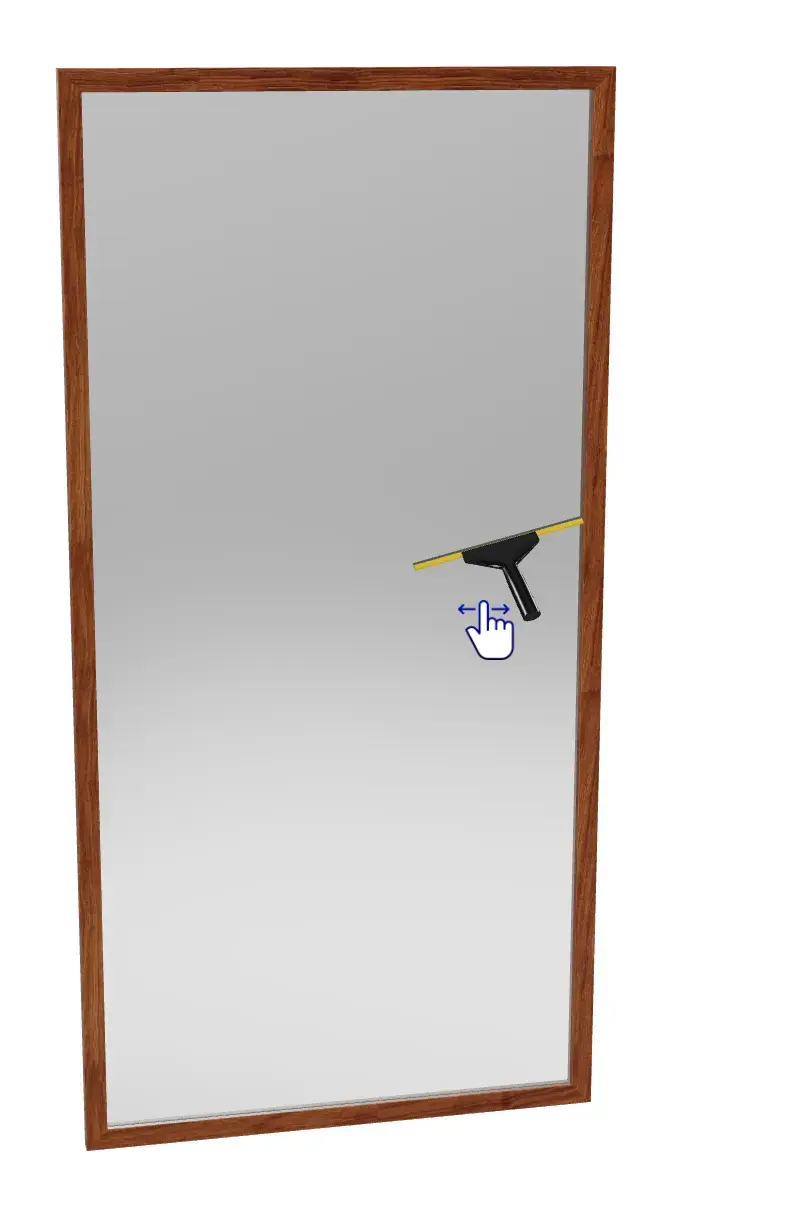
This is the problem we built our AR training tool to solve. It's the world's first augmented reality squeegee trainer — it works on your phone and gives you real-time visual feedback on your technique as you practice. You see your angle, your pressure, and your path overlaid on your actual movements.
Think of it like a golf simulator or a batting cage with sensors. The feedback loop is immediate, so you build correct muscle memory from rep one — not after weeks of guessing.
It's included in all paid tiers of the Orloffs training system and works on any modern smartphone. No special equipment needed.
Quick Reference: The Streak-Free Window Cleaning Checklist
Save this for your next cleaning session:
- Work in shade or on an overcast day
- 2–4 blops of dish soap per gallon of cold water
- Dry-wipe frames and sills before any water touches glass
- Wet the entire pane evenly with your mop applicator
- Squeegee at 45 degrees, consistent pressure, top to bottom
- Wipe blade after every stroke
- Detail edges and corners with a damp microfiber immediately
- Final inspection from the side with light at your shoulder
Ready to Go Further? Take the Full System.
Reading about technique is a great start — but building real muscle memory requires practice with feedback. That's what the Orloffs 5-Step Training program is designed for.
- Start free with the 5-Minute Window Cleaning Manifesto — clean your first window streak-free today
- Practice with the AR Training Tool — real-time feedback on your squeegee angle and pressure
- Master every surface type, condition, and tool with the full 90-minute Mastery Course
Beginners start at $69. Full professional training with live AMA access at $199. 30-day money-back guarantee on all tiers.
Visit orloffs.com to start your first streak-free window today.