VELUX roof windows feature a 180-degree rotation system that allows you to clean the outer pane from inside your home. The centre-pivot design, combined with a barrel bolt locking mechanism, means you can access the exterior glass safely without ladders or scaffolding.
With 25 years in professional window cleaning, I have cleaned hundreds of VELUX skylights across Vienna and Melbourne. The rotation feature makes these windows easier to clean than most people expect, but the glass still requires proper technique to avoid streaks and protect the coatings.
This guide combines VELUX's official care recommendations with the professional glass-cleaning method I use every day.
Why VELUX Windows Need Careful Cleaning
Three factors make VELUX roof windows different from standard vertical windows.
First, the angle. Roof windows sit at a pitch, which means dirt, pollen, bird droppings, and organic debris accumulate faster than on vertical glass. Rain helps, but it does not remove everything. The buildup bonds to the surface over time.
Second, the coatings. Many VELUX windows feature Low-E coatings or self-cleaning glazing technology. These coatings are invisible but sensitive to abrasive cleaning methods. Scratches from metal tools or harsh chemicals can permanently damage the performance of the glass.
Third, the access. Although the rotation system brings the outer pane inside, you are still working overhead or at an awkward angle. This makes proper tool selection and technique more important than with windows at eye level.
Before we look at the step-by-step cleaning method, it helps to understand professional glass-cleaning technique. The foundational skills apply to every window, including VELUX skylights.
👉 The Window Cleaning Manifesto covers the essential tools, soap-water preparation, and basic squeegee turns. It is free and takes five minutes.
What VELUX Recommends
VELUX publishes specific care instructions for their roof windows. These are the manufacturer's guidelines, presented exactly as written:
- Avoid contact from silicone with the pane.
- Do not use any cleaning products containing abrasive particles.
- Do not use chemical products for cleaning the pane.
- Avoid contact with the pane from all sharp or abrasive objects, including jewellery.
- Never attempt to clean off dirt on the pane without first applying water.
- If any works are taking place near the pane, protect the glass with a clean plastic sheet to prevent splashes or staining from aggressive compounds.
VELUX also specifies the tools you can use: a soft, clean, lint-free cloth, chamois leather, non-abrasive sponge, or a clean, non-metal window squeegee (a flat tool with a rubber blade for wiping off water).
For cleaning solution, VELUX states that clean water is usually sufficient. In hard-water areas, they recommend adding a small amount of detergent to soften the water.
These guidelines are solid. My value is demonstrating the professional cleaning method that produces streak-free results every time, using tools and techniques that meet VELUX's specifications.
What I Add as a Professional
The manufacturer's recommendations tell you what to avoid. The professional method tells you exactly how to clean the glass, step by step, so the dirt is fully removed without leaving streaks or residue.
This is the same technique I use on premium architectural glass across Vienna, adapted for the overhead working position of VELUX roof windows.
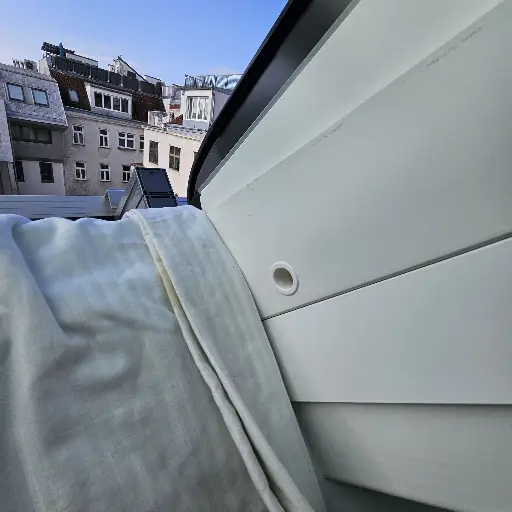
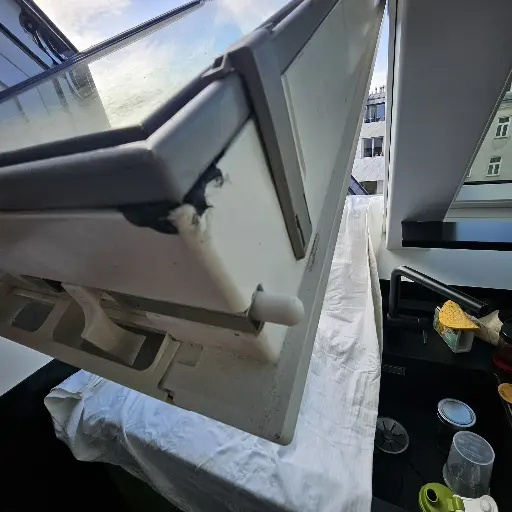
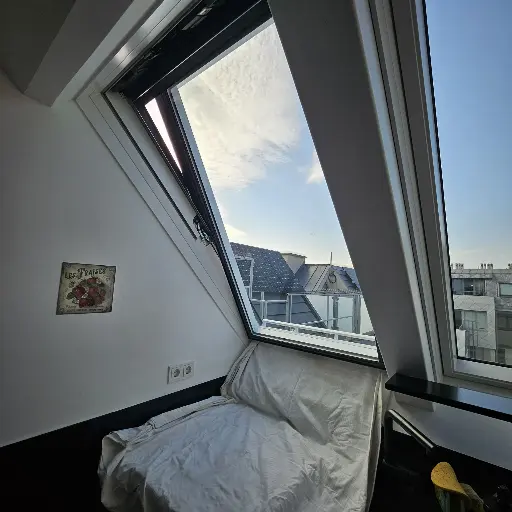
Preparation: Rotate and Secure the Window
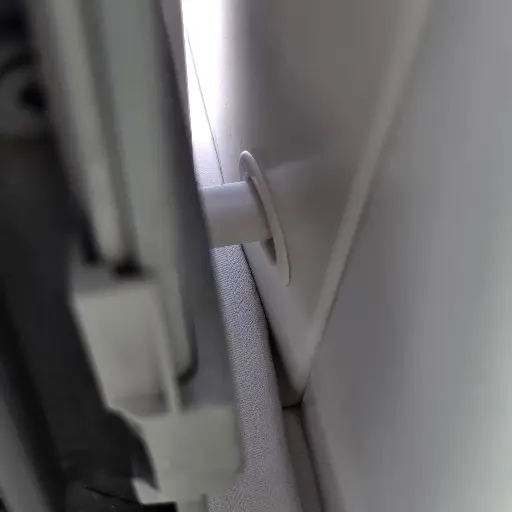
For centre-pivot VELUX windows, pull down the handle at the top and rotate the sash (the moving part of the window) 180 degrees until the outer pane faces you. Slide the barrel bolt (a small metal pin at the top of the window) into the bushing (the receiving hole in the bottom of the frame). This locks the window in the cleaning position, leaving both hands free.
For top-hung VELUX windows, release the bottom handle without opening the window. Pull down the bar at the top to unlock the pivot, then rotate the window into the cleaning position and secure with the barrel bolt.
Remove any jewellery, watches, or rings. VELUX specifically warns that these can scratch the glass.
Agitation: The Step Most People Skip
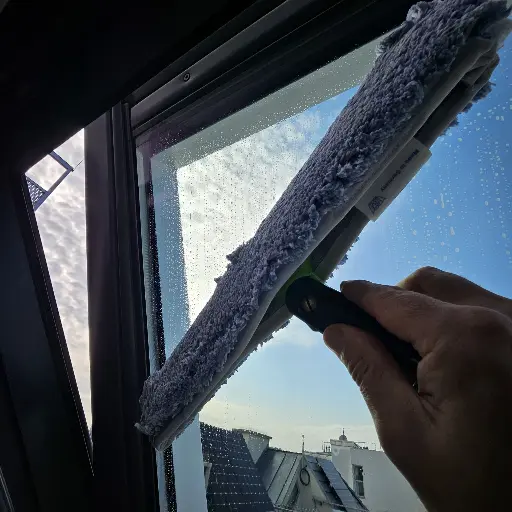
This is where streak-free results begin. Dip your microfibre T-bar (a T-shaped tool covered in microfibre fabric designed for washing glass) into the soapy water on both sides. Remove excess water with your hand so it does not drip.
Agitate the dirt with up and down or side-to-side motions across the entire glass surface. The idea is to dissolve the dirt, ready for the squeegee to shave away.
If the dirt is not fully dissolved in the soap water and released from the glass, the remaining dirt still stuck will be transported over the glass, leaving smudges or smears.
For VELUX windows with heavy buildup from pollen, bird droppings, or tree sap, you may need to let the soap water sit on the glass for a minute before agitating again. Stubborn spots that persist need pre-soaking. Lots of soap water must be used until all buildup is released.
VELUX prohibits abrasive scrubbing pads on their glass. Stick with the microfibre applicator.
Detail the Frame Before Squeegeeing
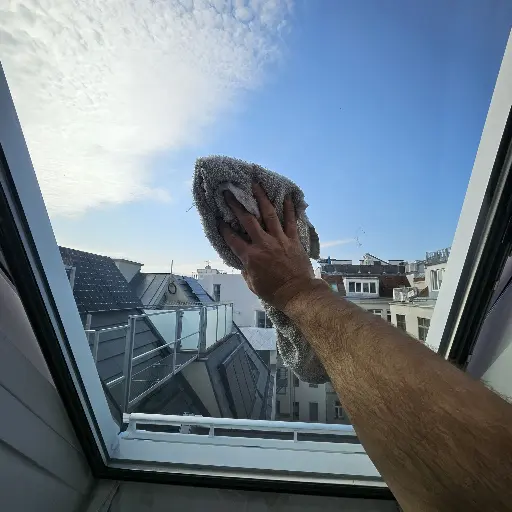
Now that the soap is sitting on the glass and the buildup has dissolved into the soap, detail the edge where the glass meets the frame.
With your 100% cotton towelling rag (which has excellent absorbency properties and leaves little to no lint on the glass), use your finger to get into the edge where the glass meets the rubber seal and take away any pooled soap water to avoid drips.
This detailing removes dust and dirt buildup that the squeegee cannot reach. As you advance your skills, this detailing becomes more refined and targeted.
The Squeegee: Side-to-Side Turn
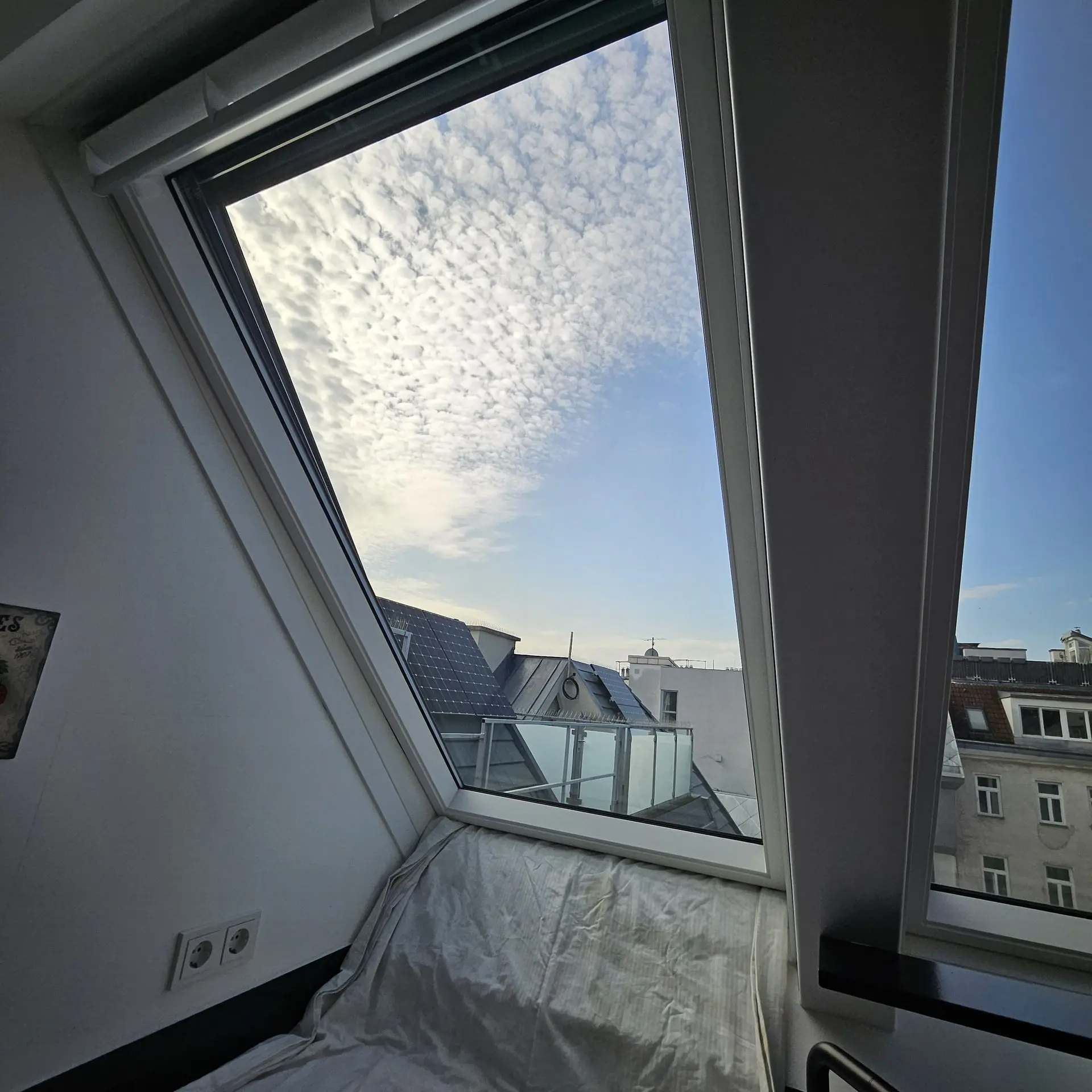
With the window in the cleaning position, the glass is now roughly vertical. Use the side-to-side turn.
Cutting in (the first connection of the squeegee rubber to the glass) can be done dry, starting with a dry rubber on a dry edge. Start at the top corner.
Work your way across the window in a straight line. To avoid creating lines from water spilling over both sides of the squeegee, tilt the squeegee at a slight angle. This directs the water to spill from only one side of the squeegee channel.
Wipe the squeegee rubber dry with your rag after each line is completed. This gives a clean, streak-free start to the following line.
Overlap from one line to another. The overlap should be as small as possible, making less work for you by removing more soap water.
Finishing precisely on the edge requires extra pressure on the glass into the frame. Adjust the angle for the rubber blade with a wrist rotation.
Finishing: Edge Detailing
Clean away any excess soap water using your finger pressed into your 100% cotton towelling rag. Get into the edge where the glass meets the frame and remove any pooled soap water.
Control where the rag is in your hand so it only touches the glass where you need it to collect the soap water. Rotate the rag so you are only touching the glass with a clean part of the rag.
For VELUX windows, pay attention to the gasket area at the bottom of the sash. VELUX notes that drain holes in the corners of the bottom sash glazing gasket should be cleaned periodically to allow water to flow freely.
Frame and Hardware Maintenance
Once the glass is complete, address the frame and hardware.
For GGU models (polyurethane-coated frames), VELUX states that surfaces can be cleaned with ordinary household cleaners.
For GGL models (wood frames with a painted finish), VELUX notes that the finish is not permanent and may need periodic inspection and repainting. Do not get varnish or paint on the gaskets or glass.
VELUX recommends lubricating hinges at least once a year to prevent friction wear. The company sells maintenance kits (ZZZ 220) that include the appropriate lubricant.
Cleaning Frequency
For most VELUX roof windows, I recommend cleaning the glass twice per year: once in spring after pollen season and once in autumn after leaves have fallen.
Windows under trees or near chimneys may need more frequent cleaning. Windows with self-cleaning glazing need less frequent attention, but the self-cleaning coating works best when the glass receives regular rainfall.
Clean the air filter when you clean the glass. The filter can be removed and washed with ordinary household cleaners. Clean the flashing (the metal surround that integrates the window with the roof) once per year by removing leaves and debris so rainwater can drain freely.
What NOT to Do
VELUX is explicit about what damages their windows:
- Do not use cleaning products containing abrasive particles.
- Do not use chemical products on the pane.
- Do not use metal scrapers, blades, or knives. Scratches from scraping are not covered under any VELUX warranty.
- Do not let silicone contact the glass.
- Never attempt to clean off dirt without first applying water.
- Do not use a pressure washer directly on the glass or seals.
If you need to remove tree sap, label adhesive, or paint spots, VELUX allows a new razor blade on small spots only, scraping in one direction. Back-and-forth scraping can trap abrasive materials under the blade, causing permanent damage. But as a professional, I avoid razor blades entirely on coated glass. Additional soap water and patience usually work.
Why Professional Technique Matters
The difference between amateur cleaning and professional results is consistency. When you understand agitation, the squeegee turns, the correct angle and pressure, and proper detailing, you get the same streak-free finish every time.
VELUX windows bring natural light into spaces that would otherwise be dark. A clean skylight transforms a room. A streaky skylight is a constant distraction.
The technique in this guide is the same method I use for premium clients across Vienna. It works because it follows the fundamental principle: dissolve the dirt fully, then remove it cleanly.
Protecting Your Investment
VELUX windows are designed to last decades. The 180-degree rotation feature makes professional-quality cleaning accessible to any homeowner willing to learn the technique.
The manufacturer's guidelines protect the glass and coatings. The professional method produces the results.
👉 Start with the free Window Cleaning Manifesto for foundational technique. The Beginner Program at $69 includes the AR Training Tool for building muscle memory and the complete Mastery Course. Lifetime access.
AUTHOR BIO
Justin Orloff is a professional window cleaner with 25+ years of experience, based in Vienna, Austria. He has cleaned hundreds of VELUX roof windows across residential and commercial properties and created the world's first AR window-cleaning training platform. His training programmes are used by Clear View Creators worldwide.