
Gaulhofer has been building windows in Styria, Austria, since 1919. The company's roots in Austrian carpentry go back even further, to 1888. Today, Gaulhofer is one of Austria's leading window manufacturers, building in four materials: pure wood, wood-aluminium, uPVC, and uPVC-aluminium. Its NATURELINE, FUSIONLINE, INLINE, and ERGOLINE ranges are in homes across Austria, Germany, Switzerland, and beyond.
In 25 years of professional glass care, I've cleaned every Gaulhofer format. This guide covers the professional technique alongside Gaulhofer's own care recommendations. Both together are what protect the investment.
Why Gaulhofer Windows Need the Right Approach
Before getting into the method, it helps to understand what you're working with. Gaulhofer builds in four different materials, and each one needs a slightly different approach.
Pure wood: NATURELINE range.
Gaulhofer's NATURELINE windows use premium Austrian timber, Alpine spruce and larch selected for their quality. The exterior surfaces are painted or oiled. These are the windows that need the most care, particularly on the outside, depending on their exposure to the weather. Harsh cleaning products and abrasive cloths damage the paint and oil finish.
Wood-aluminium: FUSIONLINE and INLINE ranges.
These are Gaulhofer's best-selling ranges. A timber core with an aluminium shell on the outside. The aluminium exterior completely protects the wood from rain, snow, and other weather conditions. Gaulhofer describes these windows as practically maintenance-free on the exterior. For cleaning, you're working with the aluminium surface, not the timber. It responds well to mild soapy water and a soft cloth.
uPVC and uPVC-aluminium: ERGOLINE range.
Gaulhofer's ERGOLINE combines uPVC profiles with an aluminium exterior shell. These are durable, low-maintenance frames. The same rule applies: mild soapy water and a soft cloth only. No solvents. No ammonia. No bleach. These chemicals degrade uPVC surfaces, damage rubber gaskets, and affect the finish over time.
Whichever Gaulhofer range you own, the glass cleaning technique is the same. The frame care differs. Knowing which material you have determines which approach to use on the frame.
If you're new to professional glass technique, the Window Cleaning Manifesto is free and takes five minutes.
Start with the free Window Cleaning Manifesto at orloffs.com/manifesto
What Gaulhofer Recommends
These care guidelines come directly from Gaulhofer's official service and care page. Gaulhofer's full care instructions are available at gaulhofer.com/en/service-care — your Gaulhofer specialist partner is also the right first point of contact for any model-specific questions.
- Clean uPVC and wooden windows regularly. Both need consistent maintenance to protect the surface and maintain appearance.
- For all frame surfaces: mild soapy water and a soft cloth. This applies to uPVC, aluminium-clad, and wood window surfaces.
- Do not use solvents on any surface. Solvents damage uPVC, degrade rubber gaskets, and affect aluminium and timber finishes.
- Do not use ammonia-based window cleaners. Most commercial glass sprays contain ammonia. These are not safe for any Gaulhofer frame material.
- Do not use bleach on any surface. Bleach discolours uPVC, damages seals, and weakens the frame material over time.
- Do not use abrasive cloths, steel wool, or stiff brushes on any surface.
- Hardware requires oiling approximately once per year. Contact your Gaulhofer specialist partner for this work.
- Wood window exteriors need additional skilled care depending on their weather exposure. Your installer is the correct contact for wood-specific maintenance products and intervals.
These are the manufacturer's guidelines. My job is to add the glass technique on top. That's where 25 years of experience count.
The Professional Technique for Gaulhofer Glass
What You Need
Have everything ready before you start.
- A T-bar applicator with a microfiber cover: a T-shaped handle with a horizontal bar covered in microfiber, designed to wash glass
- A professional squeegee with a fresh rubber blade: a flat tool with a rubber blade that shaves the water cleanly from the glass
- A bucket with lukewarm water and one drop of mild dish soap per litre
- 100% cotton towelling rags, dry, for edge detailing
- A soft cloth for the frame surfaces
Do not use paper towels on glass. They leave fibres and have no place in professional glasswork.
Detail the Frame First
This is the step most people skip. It's also the step that causes most streaks.
Before touching the glass, wipe the window frame edges with a cloth dampened in mild soapy water. This removes dust, pollen, and grime from the frame. When the squeegee reaches the edge of the glass, the rubber contacts the frame. Any dirt sitting there gets picked up and dragged across the clean glass as a streak.
Clean the frame first. Every time.
On NATURELINE wood frames, use only a soft, damp cloth. Nothing abrasive. Nothing with ammonia. The painted and oiled surfaces scratch and stain easily.
On FUSIONLINE and INLINE aluminium shells, a soft cloth with mild soapy water works well. The aluminium exterior handles regular cleaning without issue.
On ERGOLINE uPVC-aluminium: same approach. Soft cloth, mild soapy water. Rinse thoroughly to prevent residue buildup in the profile channels.
Agitation: The Step That Changes Everything
Dip your T-bar applicator fully into the soapy water on both sides. Apply the solution across the whole glass area using up-and-down or side-to-side motions. The idea is to dissolve the dirt, ready for the squeegee to shave away.
If the dirt isn't fully dissolved in the soap water and released from the glass, the remaining dirt still stuck will be transported over the squeegee, leaving smudges or smears.
This is the step I spend the most time on in my Mastery Course. Most people move too fast here. The agitation is where the result is decided.
Take your time. On Gaulhofer's larger FUSIONLINE panels, cover the full surface with overlapping strokes before picking up the squeegee. Do not rush.
For stubborn marks like insect deposits, reapply the solution and agitate again. Never use a razor blade or sharp tool on Gaulhofer glass or frames.
Detail the Frame Before Squeegeeing
Once the glass is agitated, run a dry corner of your cotton rag along the top edge and both side edges of the frame. This removes pooled soap water sitting on the frame surfaces. When the squeegee reaches the glass edge, it will not pick up the dirty residue and drag it back across.
Ready to build this into muscle memory? orloffs.com/for-home-owners
The Three Squeegee Turns
In my training, I teach three squeegee turns. Each one has a specific purpose and suits a different situation. Together, they cover every window format in the Gaulhofer range.
Side to side.
Start at the very top edge of the glass with a dry rubber. Work across in a straight horizontal line. Tilt the squeegee at a slight angle so that soap water spills from only one side of the channel. Wipe the rubber dry after each line. Overlap slightly into the next line down. Repeat to the bottom.
Top to bottom.
Same motion as side-to-side, but working in vertical lines down the glass. Start in the top corner with a dry rubber. Tilt to direct water to the lower side. Wipe dry after each line. Overlap into the next line across. Work across the full pane.
Turn with a twist, the J tune.
The professional continuous motion. From the top of the glass to the bottom is one smooth, unbroken movement. As you complete a horizontal pass, rotate your wrist so the squeegee turns and continues down. At the bottom, rotate back and return across. No stops. When this is in your muscle memory, it is the fastest and most consistent turn for any window size.
On large Gaulhofer FUSIONLINE or INLINE panels, use the top-to-bottom turn with a pole for the upper section, then the side-to-side turn at arm height for the lower.
The turn with a twist is the one that takes the most practice. If you want to build it into muscle memory properly, the full step-by-step method with video is available at orloffs.com/for-home-owners.
Finishing: Edge Detailing
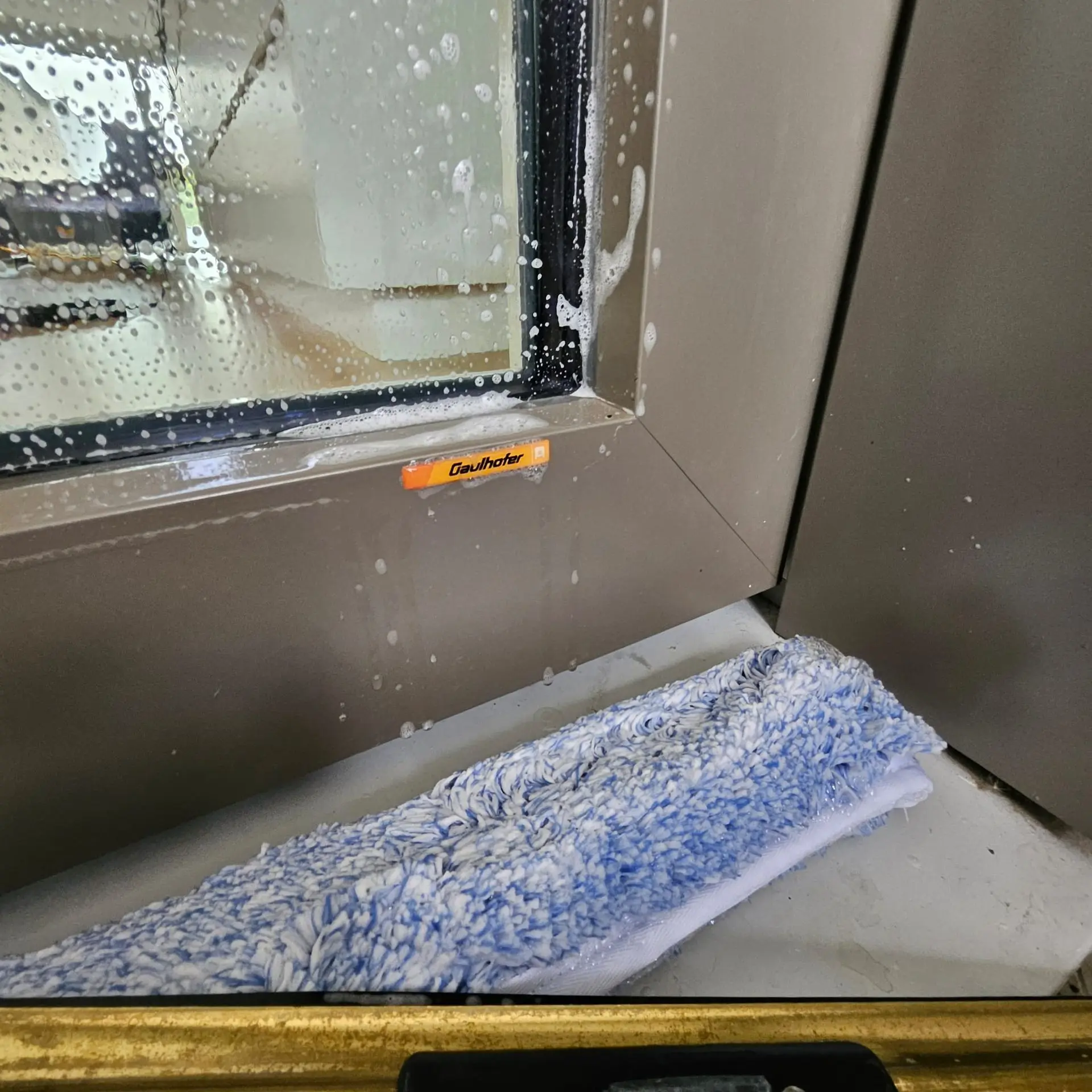
After squeegeeing, there is always a thin line of water at the bottom edge and along the sides where the rubber cannot completely seal. Take a dry cotton rag, fold it to a clean corner, and detail these edges in one smooth pass.
Get your finger into the edge where the glass meets the frame seal. Remove any pooled water sitting there. Left to dry, it leaves a residue mark that shows clearly in direct sunlight.
Rotate the rag so you only ever touch the glass with a clean, dry section. Replace the rag every few windows.
How Often Should You Clean Gaulhofer Windows?
Twice per year is the minimum for most homes: once in spring after winter grime, once in autumn before the cold months.
In Austrian cities, with urban pollution, pollen, and heating dust, quarterly cleaning keeps the glass at its best.
For wood-aluminium and uPVC-aluminium frames: a twice-yearly wipe with mild soapy water removes pollution deposits from the exterior surfaces.
For pure wood exteriors, follow the specific maintenance schedule your Gaulhofer installer provided. The wood needs additional care depending on its exposure. The 30-year warranty depends on it.
Hardware: once per year, oiled and inspected by your Gaulhofer specialist partner.
What NOT to Do With Gaulhofer Windows
These are not suggestions. They come directly from Gaulhofer's care guidelines.
- No solvent-based cleaning products on any surface.
- No ammonia-based window sprays. This rules out most commercial glass cleaners.
- No bleach on any surface.
- No abrasive cloths, steel wool, or stiff brushes.
- No sharp tools near the glass, frames, or seals.
- No high-pressure water directed at frame joints, drainage channels, or hardware.
Protecting the Investment
Gaulhofer offers a 30-year warranty on its wooden and wood-aluminium window construction. That is rare in the industry. It reflects confidence in the build quality, and it depends on the owner doing their part.
In over 25 years of cleaning premium glass across Vienna and Melbourne, I have seen clearly what makes windows age well. It is not an expensive product. It is a consistent technique and the right approach for the material in front of you.
Gaulhofer's care guidelines give you the material rules. The technique in this guide gives you the method. Together, they protect everything the engineering delivers.
If you want to take the technique further, the Window Cleaning Manifesto is free at orloffs.com/manifesto. For the complete training system with AR tool, step-by-step video, and lifetime access, the full programme is $69 at orloffs.com/for-home-owners. Less than one professional cleaning visit pays for it.
Official Gaulhofer Resources
All care recommendations in this guide are sourced from Gaulhofer's official documentation. For full manufacturer information:
- Gaulhofer service and care: gaulhofer.com/en/service-care
- NATURELINE wood windows: gaulhofer.com/en/windows/wood
- FUSIONLINE wood-aluminium windows: gaulhofer.com/en/windows/wood-aluminium/fusionline-94
- ERGOLINE uPVC-aluminium windows: gaulhofer.com/en/windows/upvc-aluminium/ergoline-windows
- Find a Gaulhofer specialist partner near you: gaulhofer.com/en/contact
For warranty information and installer servicing, contact your local Gaulhofer specialist directly. The 30-year warranty for wood and wood-aluminium construction requires maintenance at the intervals specified by your installer.
About the Author
Justin Orloff is a professional window cleaner with 25+ years of experience. He has cleaned windows from Vienna and Melbourne, from private homes with premium Austrian glass to commercial facades and high-rise buildings. He created the world's first AR window-cleaning training platform. Based in Vienna, Austria.